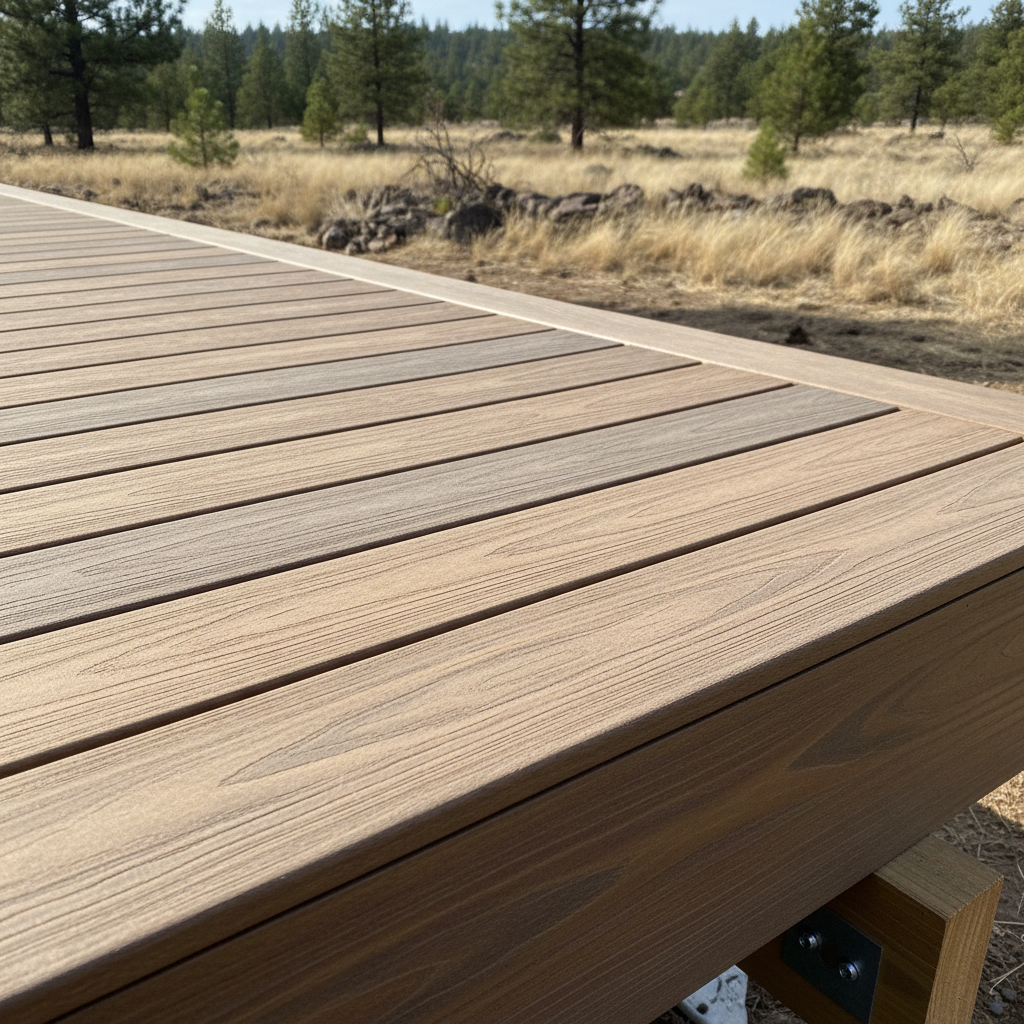
High desert sun and freezing winter nights take a hard toll on standard lumber, which is why more homeowners around Northwest Crossing and Awbrey Butte are making the switch to composite. Building with Trex completely changes the maintenance routine since you can finally drop the annual sanding and staining schedule. But tackling a project like this is not straightforward, and knowing where to draw the line between a weekend DIY project and a professional build will save you from major problems.
Before You Build: Planning and Prep
Homeowners cannot just lay composite boards down on any old frame and hope for the best. Trex has strict installation requirements regarding joist spacing, especially if you are laying boards at a 45-degree angle. Before a single screw goes in, you need to check your property lines, pull the right Deschutes County or City of Bend permits, and figure out what kind of soil you are dealing with. If your yard sits on that stubborn local basalt rock, digging footings by hand with a manual post hole digger will test your patience very fast. Renting a hydraulic auger or hiring someone with the right machinery is usually the best move right out of the gate.
During the Project: DIY vs. Pro Territory
If you have basic carpentry skills, a miter saw, and a free weekend, you can handle demoing your old wood deck and sorting the cleanup. You can also handle installing the surface boards and hidden fasteners if you are patient and follow the manufacturer manufacturer gapping guidelines closely. Where people usually get into trouble is framing squareness, ledger board flashing, and multi-level stair framing. Miss that ledger flashing detail, and water creeps straight into your home rim joist. Bend Deck Creations spends a lot of time fixing crooked frames that started out with good intentions. If your design involves complex curves, custom multi-tier steps, or a tricky ledger attachment, leave the heavy lifting to a crew that does Deck Construction every day.
After the Build: Keeping It Looking Sharp
One of the best parts about finishing a Trex build is that your work is mostly done once the cleanup crew leaves. You do not need to seal it, but you do need to clean it. Pine needles from our local ponderosa pines love to sit in the grain and trap moisture, which leads to stubborn mildew spots if you ignore them. Give your Deck a good sweep a few times a month and wash it down in the spring with some mild soap and warm water. Avoid using a pressure washer on high settings because it can gouge the composite cap stock and ruin the finish. Keep your snow shovel in the garage during winter storms too, and use a plastic snow rake instead so you do not scratch up the boards when clearing off that heavy Central Oregon snowfall.